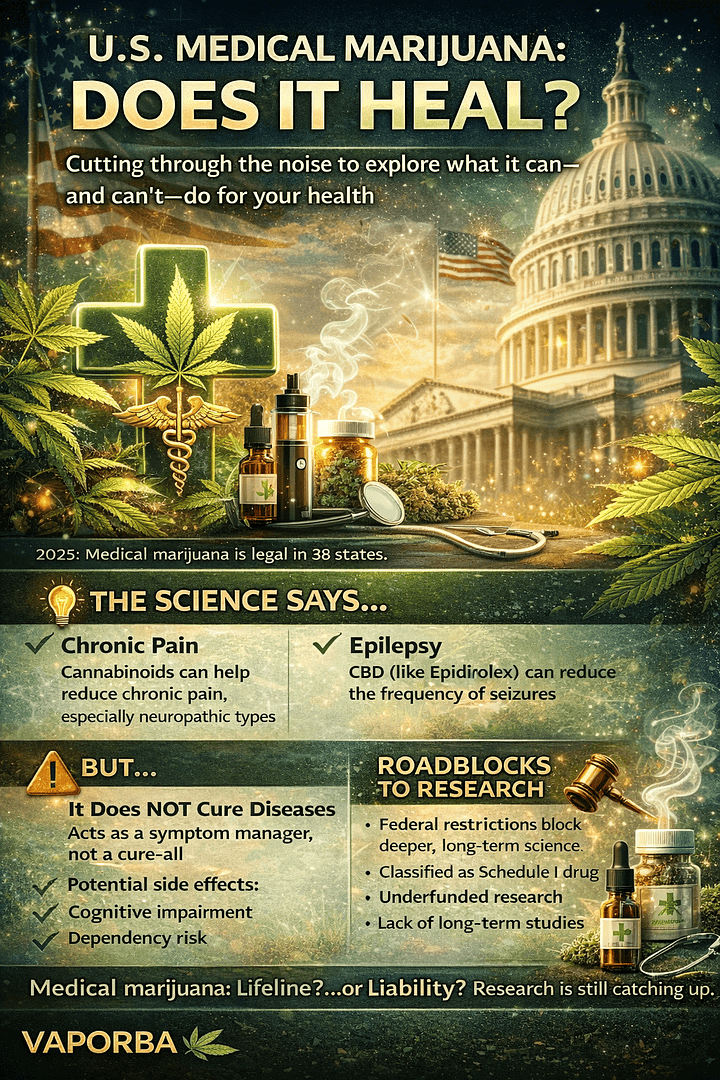
As medical marijuana gains traction across the United States, with 38 states legalizing it by 2025, a big question looms: does it actually cure diseases? This article cuts through the noise, diving into the science to reveal what medical marijuana can—and can’t—do for your health.
Medical marijuana involves using the cannabis plant or its compounds, like THC and CBD, to treat health conditions under a doctor’s supervision. Unlike recreational use, it’s targeted at specific medical needs. While states like California have embraced it since 1996, it’s still a Schedule I drug under federal law, complicating research and access.
Let’s get this straight: medical marijuana doesn’t cure diseases. Instead, it’s a tool for managing symptoms. Here’s what the evidence shows:
For more, it gets murkier:
Here’s a twist you might not expect: the federal ban stalls science. Classified as Schedule I, marijuana’s research is underfunded and restricted, leaving gaps in long-term data. This means we’re still guessing about its full potential and risks.
Medical marijuana isn’t all rosy. Side effects include:
Long-term use is a gray area, and the debate rages: is it a lifeline or a liability?
With talks of moving marijuana to Schedule III in 2025, research could explode, giving us clearer answers. Public support is sky-high—88% back legalization per a 2024 Pew Research survey—pushing the needle forward.
Q: Is medical marijuana legal everywhere in the U.S.?
A: No, it’s legal in 38 states, but federal law lists it as Schedule I, creating a legal mess.
Q: How do I get it?
A: You’ll need a doctor’s note and to join your state’s program—check local rules.
Q: Does it work for everyone?
A: Not quite. It helps some, but risks like dependency make it a case-by-case call.
Medical marijuana in the U.S. isn’t a cure-all—it’s a symptom manager. Science backs its use for pain, nausea, and some seizures, but mental health benefits are less certain. With research lagging due to federal hurdles, it’s a mixed bag. Talk to your doctor to see if it’s right for you.
Got questions? Drop them below and subscribe for more cannabis updates!
Note: Based on data as of March 11, 2025. Laws and research may shift, so check your state’s latest rules.