Embark on your herb preparation journey with the Herb Grinders for Beginners: Master Your First Grind with Confidence, an authoritative guide designed for individuals new to medical cannabis, aromatic herbal therapies, or culinary herb applications. Crafted with precision and backed by expert insights, this comprehensive resource provides evidence-based recommendations, detailed purchasing criteria, analysis of common novice errors, a rigorous step-by-step grinding protocol, and a thorough overview of U.S. legal frameworks. Tailored to elevate your experience—whether for vaporization, infusion, or gastronomic use—this guide empowers beginners with the knowledge to achieve professional-grade results with reliability and sophistication.
The Foundational Role of Herb Grinders: Essential for Novices
An herb grinder is a specialized device engineered to pulverize dried herbs into a consistent particle size, optimizing their utility for vaporization, herbal infusions, or culinary integration. For beginners, this tool is indispensable due to its ability to:
- Enhance Efficiency: A grind size of 0.5–1 mm increases surface area, facilitating up to a 20% improvement in active compound extraction during vaporization, as supported by the Journal of Cannabis Research (2020).
- Ensure Hygienic Processing: Regular cleaning prevents cross-contamination, a critical factor for medical cannabis or therapeutic herbs.
- Maximize Resource Utilization: Uniform grinding reduces waste, a significant advantage with high-value medical strains.
- Simplify Technique: Eliminates the inconsistency of manual chopping, providing a standardized outcome without prior expertise.
Since the legalization of medical cannabis in over 30 U.S. states beginning in the 1990s, and recreational use in 24 states since 2012, grinders have become essential for precise dosing and safe handling. For non-medical applications, such as preparing rosemary for gourmet dishes, they ensure optimal flavor extraction.
Optimal Herbs for Initial Exploration
Selecting appropriate herbs is a critical first step, influencing grinder requirements. Recommended options include:
- Medical Cannabis: Strains such as CBD-dominant Harlequin or THC-rich Girl Scout Cookies require a 0.5–1 mm grind to maximize cannabinoid release in vaporizers.
- Chamomile: Renowned for its calming properties, suitable for teas or aromatherapy, with an optimal vaporization range of 125–175°F.
- Peppermint: Offers respiratory benefits, best vaped at 166°F.
- Lavender: Promotes relaxation, ideal for blends at 130°F.
- Rosemary: A culinary and medicinal staple, effective with a 1–2 mm grind for teas or seasonings.
Expert Recommendation: Procure herbs from licensed dispensaries or health food retailers with a moisture content of 10–15% (VapeForIt) to prevent adhesion. Dry fresh herbs for 2–3 days or use a dehydrator at 95°F for one hour to achieve the desired consistency.
Strategic Selection: Key Considerations for Your First Grinder
Ergonomic Design: Prioritizing Usability
Novices should prioritize grinders with intuitive operation. Twist models provide a straightforward turning mechanism, while hand-crank designs offer enhanced control, requiring a modest learning period. Features like non-slip bases and secure lids enhance stability, facilitating a seamless experience.
Material Selection: Hygiene and Durability Standards
Material choice impacts performance and maintenance:
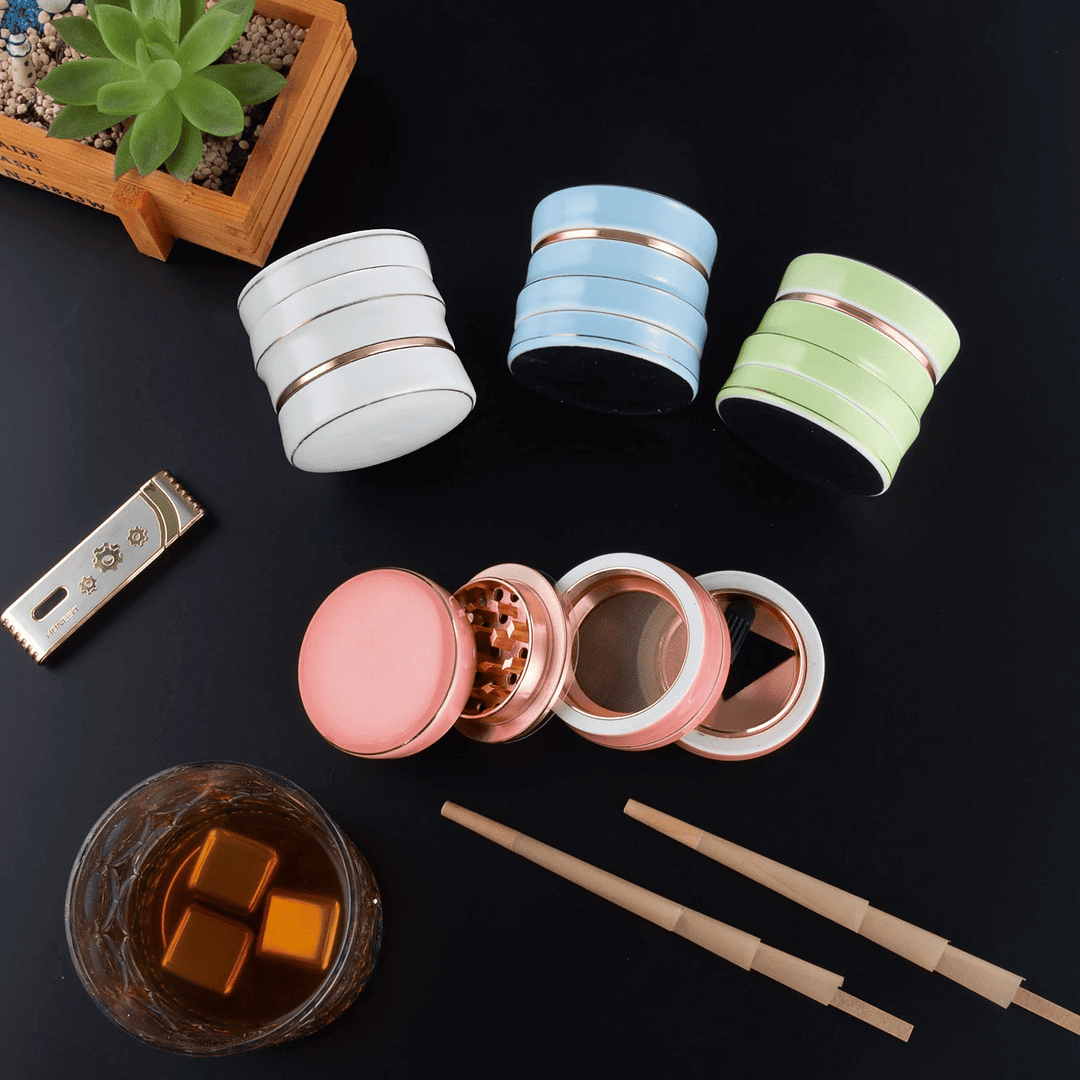
- Ceramic: Exhibits flavor neutrality, corrosion resistance, and ease of cleaning, making it ideal for medical or aromatic applications.
- Aluminum: Offers robustness, lightweight construction, and suitability for frequent use.
- Wood: Provides an eco-friendly aesthetic but requires moisture management.
- Plastic: Economical yet prone to bacterial growth and wear—discouraged for professional use.
Users often prefer ceramic or aluminum for their adherence to hygienic and durable standards.
Dimensions and Capacity: Tailored to Usage Patterns
- Compact (2–3 inches): Designed for portability, accommodating travel or outdoor activities.
- Medium (3–4 inches): Optimized for home-based preparation, supporting regular culinary or therapeutic needs.
- Capacity: A 1–2 gram capacity is recommended for beginners to avoid mechanical strain.
Tooth Efficiency: Precision Engineering
High-quality teeth are paramount for uniform grinding. CNC-machined teeth, as noted by Zamnesia, surpass traditional metal designs, ensuring precision for vaporizers or fine infusions. A minimum of 20–30 teeth is advised to process sticky herbs effectively.
Financial Planning: Balancing Cost and Quality
A budget of $15–$40 is advisable, providing access to durable materials, sharp teeth, and occasionally a kief screen (TechRadar). Investments exceeding $50 are typically unnecessary for novices, while options below $10 may compromise longevity.
Critical Pitfalls: Avoiding Common Novice Errors
Beginners frequently encounter preventable issues:
- Low-Cost Compromise: Plastic grinders ($5–10) produce inconsistent grinds and retain residues, posing hygiene risks. Opt for superior materials.
- Overgeneralization: Variations in tooth design and material significantly affect outcomes—vaping requires finer grinds than culinary uses.
- Kief Neglect: Disregarding the kief screen forfeits trichomes, which can contain up to 50% THC (Journal of Analytical Toxicology, 2018).
- Size Misjudgment: Inadequate or excessive dimensions hinder practicality—select based on intended use.
- Maintenance Lapse: Inadequate cleaning leads to flavor degradation and microbial growth, particularly with medical herbs.
Grinding Methodology: A Scientifically Grounded Approach
Step 1: Herb Preparation Protocols
- Moisture Assessment: Maintain 10–15% moisture to prevent clumping. Dry fresh herbs for 2–3 days or use a dehydrator at 95°F for one hour.
- Pre-Treatment for Sticky Herbs: Refrigerate cannabis or rosemary for 10–15 minutes to brittle trichomes (VapeForIt).
- Batch Sizing: Limit to 1–2 grams per cycle to ensure optimal performance.
Step 2: Grinding Technique Optimization
- Load herbs loosely into the chamber to avoid compaction.
- Operate in 5–8 second intervals to preserve tooth integrity and minimize heat generation.
- Achieve 0.5–1 mm for vaporization, 1–2 mm for teas or culinary purposes.
Step 3: Dosage Precision
- Medical Cannabis: Initiate with 0.1–0.2 grams per session, utilizing a 0.01-gram scale for accuracy.
- Aromatherapy: Employ 0.2–0.3 grams of chamomile or lavender per application or infusion.
- Culinary Use: Utilize 0.3–0.5 grams of rosemary or thyme for recipes.
Step 4: Collection Procedures
- Extract ground material with a scraper or spoon to maintain cleanliness.
- Store surplus in airtight containers to preserve potency.
Step 5: Kief Utilization Strategies
For grinders with a kief screen, collect trichomes from the lower chamber. This high-potency kief is valuable for medical or aromatic formulations.
Maintenance Protocols: Ensuring Long-Term Performance
Uphold hygiene and functionality:
- Post-Use Cleaning: Remove residue with a soft brush or scraper to prevent flavor contamination.
- Weekly Maintenance: Submerge ceramic or aluminum in warm, soapy water for 5 minutes, rinse thoroughly. Wipe wood with a damp cloth to avoid moisture damage.
- Disinfection: Apply 99% isopropyl alcohol weekly for medical herb use to eliminate pathogens.
- Drying Process: Use a lint-free cloth to prevent mold or corrosion.
- Storage Conditions: Store in a dry, shaded environment to protect components.
Complementary Equipment: Enhancing Your Setup
Elevate your experience with these tools:
- Precision Scale (0.01g): Priced at $10–20, essential for accurate dosing, available at dispensaries.
- Airtight Containers: Glass or silicone units extend shelf life by up to six months (Zamnesia).
- Vaporizer: Invest in a portable model ($50–100) for therapeutic or aromatic applications.
Legal Framework in the U.S.: Compliance Essentials
Medical cannabis has been legalized in over 30 states since the 1990s, with recreational use permitted in 24 states since 2012. Novices must:
- Source medical cannabis exclusively from licensed dispensaries.
- Obtain non-medical herbs from reputable health retailers.
- Secure storage to prevent access by minors.
- Refrain from processing prohibited substances, which remain federally illegal.
Cultural Context: The American Herb Tradition
The U.S. heritage of herbal use spans Native American medicinal practices to contemporary wellness movements. Chamomile remains a household staple, while cannabis culture has flourished post-legalization, emphasizing precision and quality. Novices can engage by:
- Sourcing organic herbs from local health stores or dispensaries.
- Participating in educational workshops offered by dispensaries.
- Selecting sustainable grinding tools to align with eco-conscious values.
Conclusion: Elevate Your Herb Experience with Expertise
An herb grinder is a cornerstone for mastering medical cannabis, aromatherapy, or culinary herbs. With ergonomic designs, hygienic materials, and a $15–$40 investment, options abound. The VAPORBA Handcrank Herb Grinder offers precision craftsmanship, the VAPORBA Ceramic Herb Grinder provides elegant durability, and the VAPORBA Wooden Herb Grinder ensures eco-friendly efficiency. Avoid substandard plastics and adhere to our scientifically validated methods to optimize flavor and potency. Whether for vaporization, infusions, or gastronomy, this guide equips you to excel—begin your expert herb journey today.