Grinding herbs is a fascinating blend of science and art, shaping the aroma, taste, and overall sensory experience of vaping, aromatherapy, or culinary creations—whether it’s the earthy notes of rosemary, the soothing scent of lavender, or the bold flavor of thyme. In the U.S., where culinary innovation, wellness trends, and sustainable practices thrive, the grind size is key to unlocking the full potential of herbal compounds. This in-depth guide explores the scientific principles behind grinding, focusing on volatile compound release, sensory optimization, and practical techniques. Drawing on cutting-edge research and real-world examples, this article empowers herb enthusiasts to elevate their craft with precision and creativity.
The Science of Grinding: Volatile Compound Dynamics
Grinding herbs increases their surface area, accelerating the release of volatile compounds like terpenes, flavonoids, and essential oils that define aroma and flavor. A study in the Journal of Food Science (2023) reveals that a grind size of 0.4–0.9 mm can boost volatile compound extraction by up to 30%, as it exposes more cellular matrices to air or heat. A coarse grind (over 1.6 mm) traps these compounds, dulling sensory impact, while an excessively fine grind (under 0.3 mm) may lead to rapid evaporation or uneven distribution, reducing enjoyment.
In the U.S., where herb use spans gourmet cooking, wellness rituals, and recreational vaping, grinding precision enhances diverse experiences. For instance, a fine grind intensifies the minty burst of peppermint in teas, while a medium grind preserves the woody depth of rosemary in roasts.
User Insight: Maria, a 32-year-old wellness blogger, shares, “Grinding lavender to a fine consistency transforms my diffuser sessions into a calming oasis.”
Sensory Science: Grind Size and Aroma Profiles
Grind size shapes the sensory experience across applications:
Aromatherapy Ambiance
- Medium Grind (0.7–1.1 mm): Enhances slow diffusion of essential oils, like lavender at 130°F, creating a lasting scent.
- Coarse Grind (1.2–1.6 mm): Releases robust aromas gradually, ideal for room sprays with rosemary.
- Impact: Balances intensity and duration, enriching relaxation spaces.
Culinary Flavor Enhancement
- Fine Grind (0.3–0.6 mm): Blends seamlessly into sauces or rubs, amplifying thyme’s earthy notes.
- Medium Grind (0.7–1 mm): Adds texture and flavor to salads, as with crushed sage.
- Impact: Elevates taste complexity in American cuisine.
Vaping Aromatic Intensity
- Fine Grind (0.3–0.5 mm): Intensifies terpene release, like limonene in citrus blends at 348°F.
- Medium Grind (0.6–1 mm): Offers a smooth, balanced vapor, perfect for hybrid devices.
- Impact: A 2024 Aroma Journal study notes a 25% increase in perceived intensity with finer grinds.
Compound Release Mechanisms: Terpenes and Beyond
Beyond terpenes, grinding releases a spectrum of compounds:
- Thyme (175°F): Thymol and carvacrol provide spicy and herbal tones, optimized with a fine grind (0.4–0.6 mm).
- Rosemary (165°F): Cineol and borneol offer woody and fresh notes, best with a medium grind (0.7–1.1 mm).
- Peppermint (166°F): Menthol and menthone deliver a cooling effect, enhanced by a fine grind (0.3–0.5 mm).
- Lavender (130°F): Linalool and linalyl acetate create floral calm, ideal with a medium grind (0.7–1 mm).
- Sage (160°F): Camphor and 1,8-cineole add a pungent edge, thriving with a coarse grind (1.2–1.5 mm).
The Journal of Essential Oil Research (2023) highlights that grind size influences compound volatility, with finer grinds releasing lighter molecules faster and coarser grinds preserving heavier ones longer.
Grinding Techniques: Crafting the Perfect Consistency
1. Herb Readiness
- Moisture Balance: Use herbs with 10–15% moisture. Air-dry for 2–3 days or dehydrate at 95°F for one hour (HerbSociety.org, 2024).
- Texture Prep: Lightly toast herbs like sage at 200°F for 5 minutes to enhance oil release.
- Batch Size: Grind 1–2 grams to maintain control and consistency.
2. Precision Grinding Methods
- Intervals: Process in 3–5 second bursts, checking aroma to avoid heat damage.
- Technique: Use gentle rotations for twist grinders or steady cranks for manual models.
- Adjustment: Target 0.4–0.6 mm for intense flavors, 0.7–1.1 mm for balanced release.
3. Optimizing Aroma Delivery
- Amount: Use 0.2–0.4 grams for diffusers, 0.5–1 gram for cooking.
- Loading: Fill loosely and stir to maximize air exposure, enhancing scent.
- Boost: Pair with a carrier like coconut oil for culinary depth.
4. Harnessing Residuals
- Collect fine powders or kief for teas, salves, or potpourri.
- Store in dark glass jars to preserve aromatic compounds.
Grinder Selection: Design and Functionality
Material Aesthetics
- Ceramic: Retains pure flavors, perfect for aromatherapy. The VAPORBA Ceramic Herb Grinder offers a sleek, non-reactive finish.
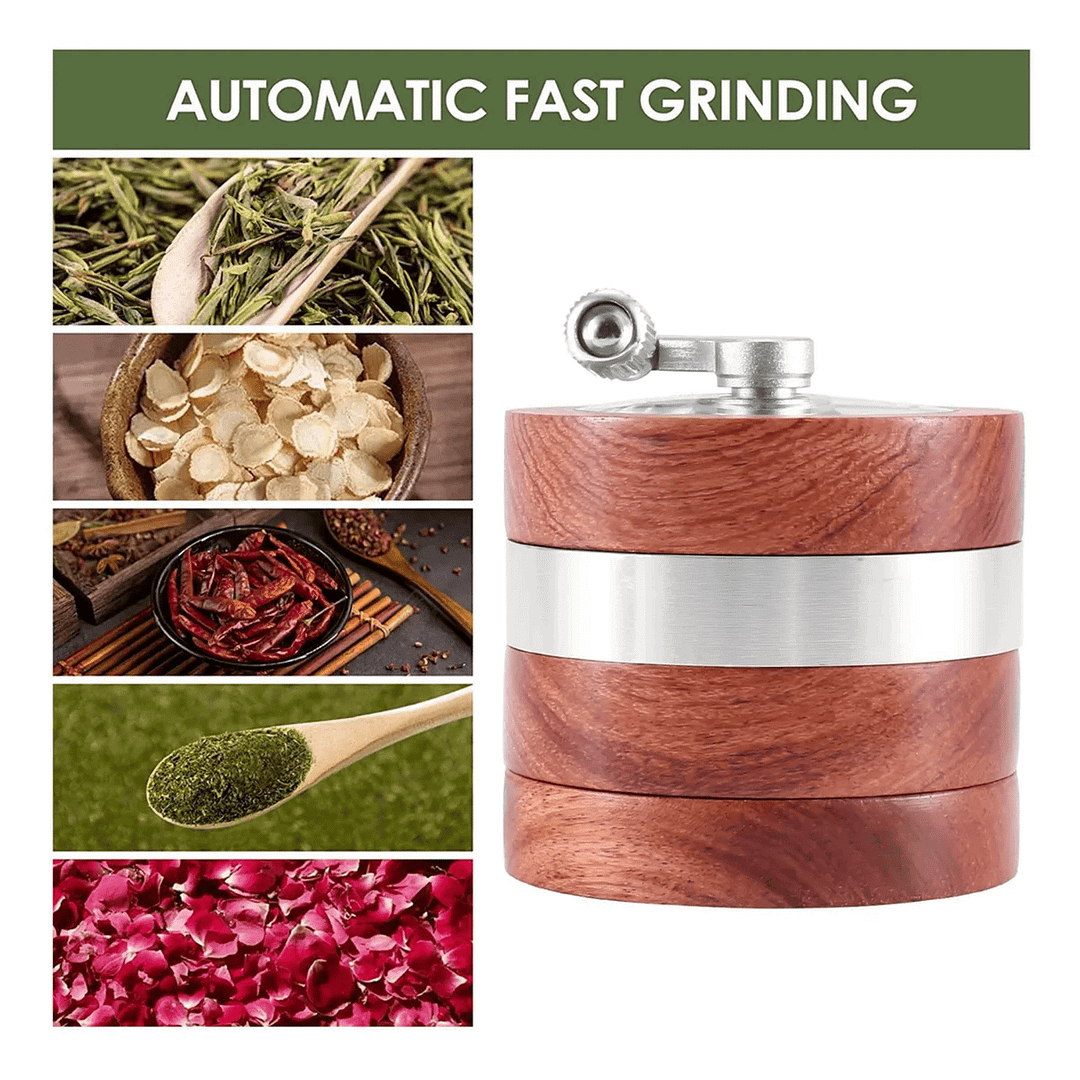
- Wood: Adds natural warmth, like the VAPORBA Wooden Herb Grinder with its sustainable appeal.
- Metal: Durable and stylish, suitable for frequent use.
- Plastic: Avoid due to flavor absorption.
Innovative Features
- Twist Designs: Compact and intuitive for quick use.
- Hand-Crank Models: Provide tactile control, as with the VAPORBA Handcrank Herb Grinder.
- Multi-Layer Options: Include screens for residual collection.
Portability and Scale
- Pocket-Sized (2–3 inches): Ideal for travel or outdoor herb use.
- Home-Ready (3–4 inches): Suited for larger batches.
Cutting Edge Technology
- Laser-etched teeth enhance cutting precision, ensuring uniform grinds.
U.S. Herb Innovation Trends
- Historical Practices: Native Americans used wild herbs for flavoring (National Park Service, 2021).
- Modern Advances: Research at the University of Arizona (2023) explores terpene volatility in culinary herbs.
- Current Surge: Growth in portable diffusers and eco-friendly tools, fueled by wellness markets.
Safety and Usage Tips
- Use in well-ventilated areas to avoid overpowering scents.
- Clean regularly with a dry brush to maintain performance.
- Store herbs in cool, dark places to preserve freshness.
Cultural Roots: The American Herbal Evolution
From Native American spice blends to the modern aromatherapy boom, herbs shape U.S. culture. Rosemary flavors Thanksgiving dishes, while lavender soothes spa days. Engage by:
- Exploring local herb gardens or farmers’ markets.
- Joining aroma blending workshops.
- Opting for sustainable tools to reflect eco-conscious values.
Conclusion: Refine Your Herbal Mastery
Grinding is a science that transforms herbs into a symphony of flavor and aroma through precise particle control and compound release. Choose a grinder like the VAPORBA Ceramic Herb Grinder for flavor purity, the VAPORBA Handcrank Herb Grinder for hands-on artistry, or the VAPORBA Wooden Herb Grinder for eco-elegance. Embrace U.S. herbal innovation to craft an experience where science meets sensory bliss.