Published: December 11, 2025 Author: Anika Guha et al. Journal: Journal of Studies on Alcohol and Drugs DOI: 10.15288/jsad.25-00346 PMID: 41379083
A major new observational study using data from the massive UK Biobank (over 500,000 participants) has just been published, and the headline is striking for anyone following the long-running debate about cannabis and brain health:
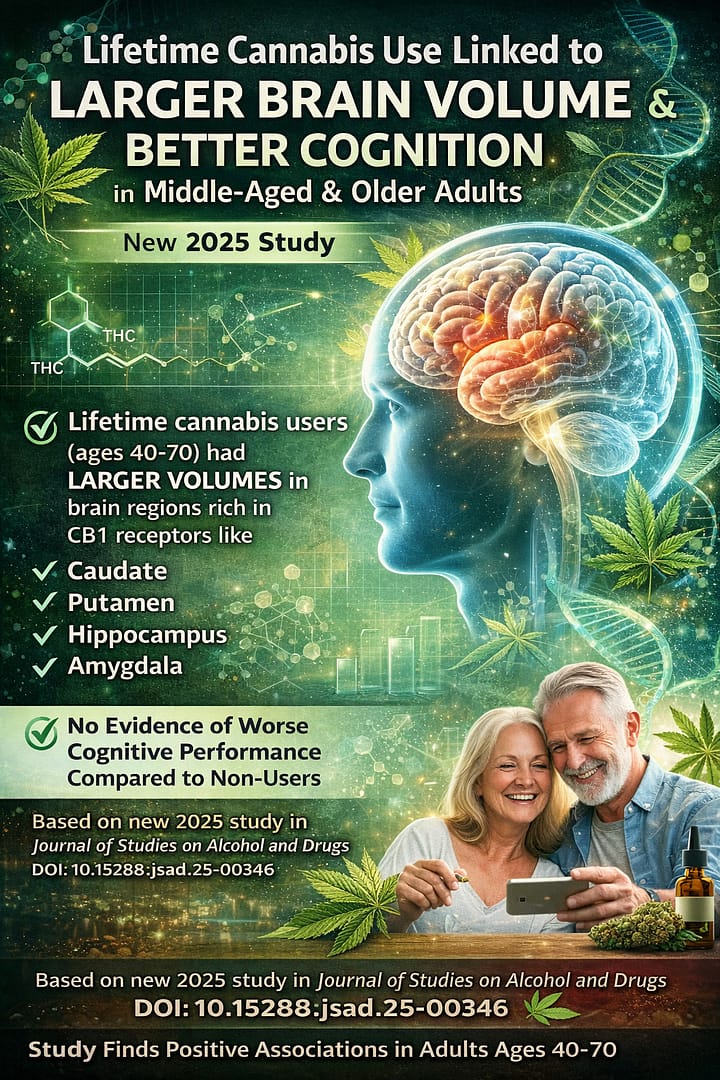
Lifetime cannabis use was associated with larger regional brain volume in several key areas — particularly regions rich in cannabinoid (CB1) receptors — and showed no evidence of cognitive impairment in middle-aged and older adults (ages 40–70, mean age ~54.5 years).
In fact, the findings suggest the opposite: cannabis may exert protective effects on brain structure and function in later life, in stark contrast to the well-documented negative impacts seen in adolescent and young adult users.
The authors are careful:
This 2025 study adds important nuance to the cannabis-brain conversation.
While decades of research (and public messaging) have focused on potential harms in developing brains, emerging data from large cohorts of older adults are painting a very different picture: lifetime cannabis exposure does not appear to harm — and may even be associated with benefits to — brain structure and cognitive function in midlife and beyond.
These findings are consistent with other recent work showing either neutral or potentially protective effects of cannabis/cannabinoids in aging populations, and they stand in contrast to the well-established risks in younger users.
As always with observational data: more research is needed, particularly longitudinal studies and trials that can better establish causality. But the direction is clear — the relationship between cannabis and brain health looks age-dependent, and blanket statements about “cannabis harms the brain” are increasingly inaccurate when applied to middle-aged and older adults.
For anyone in their 40s, 50s, 60s+ who uses or is considering cannabis (recreationally or medically), this paper offers a data-driven reason for cautious optimism.
Full citation (for reference or sharing): Guha A, et al. Lifetime Cannabis Use Is Associated with Brain Volume and Cognitive Function in Middle-Aged and Older Adults. J Stud Alcohol Drugs. 2025 Dec 11. doi: 10.15288/jsad.25-00346. PMID: 41379083.
(Always consult a healthcare provider for personalized medical advice regarding cannabis use.)
What are your thoughts? Have you noticed any changes in how you or people around you think about cannabis as we age? Drop a comment below.